Read the transcript
Dial Before You Dig in S A:
how it works, step by step, for Adelaide jobs.
Dial Before You Dig is now Before You Dig Australia, or BYDA, and in South Australia you lodge the request online or in the BYDA app, for free.
You draw your work area on a map, and the owners of the pipes and cables under it send you their plans, usually within minutes but sometimes up to two business days later.
S A Power Networks says anyone excavating anywhere in South Australia should use it, from a fence or a mailbox to a pool.
The plans are only the first step.
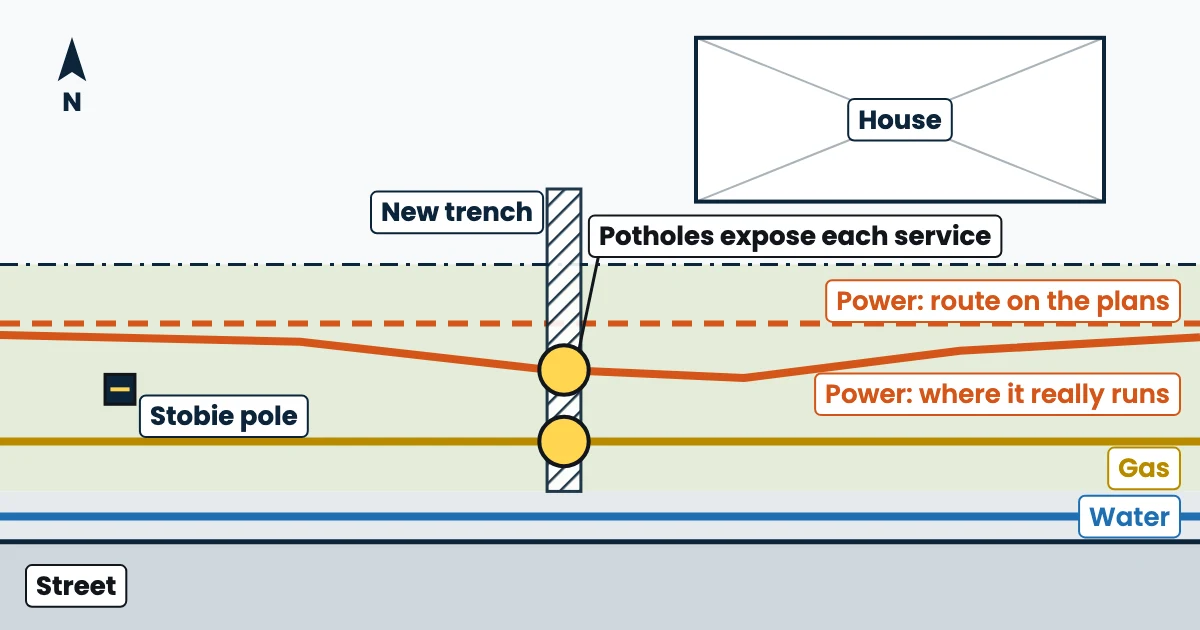
They show roughly where services run, not exactly where or how deep.
Before the main dig, someone still has to find and expose them.
Rapid Vac Trucks Adelaide does that part:
service locating, then a vac truck and an experienced operator to uncover each service so you can see it before a bucket goes near it.
Key takeaways.
A Before You Dig request in South Australia is free, and lodging is done online or in the BYDA app.
Plans usually come within minutes.
Allow up to two business days, and chase any owner who has not replied.
Plans show approximate routes only.
They rarely give a reliable depth and miss private lines.
Potholing or trenching near S A Power Networks equipment needs a Network Access Permit.
S A Power Networks says to plan the work for twenty-eight days after you accept its quote, so apply early.
Before the main dig, have each service located and exposed so its real position and depth are known.
Step one:
lodge a free request with Before You Dig Australia.
Lodge before you plan the dig, not on the morning of it.
SafeWork S A says Before You Dig enquiries must be lodged online, and BYDA's own lodgement guide lists its website and the iPhone and Android apps as the two ways in.
The old eleven hundred number is still the National Help Desk, for help with an account or a lodgement, during business hours.
BYDA's guide to free plans sets out what the request asks for.
First, your dig site, drawn on the map.
Use the mapping tools to draw the whole area you will disturb.
Second, project details:
the location, start and end dates, and the type of work.
Third, who you are working for:
a utility, a council or a private client.
And fourth, a clear description of the job, so each owner can send the right information.
Lodging costs nothing.
BYDA's F A Qs say it is free to lodge an enquiry, and that owners normally charge only for large development or design enquiries where no digging is taking place.
If someone offers to get your Dial Before You Dig plans for a fee, you can do it yourself in a few minutes.
It applies on private land too.
BYDA's homeowner answer is a plain yes, and S A Power Networks lists fences, mailboxes, driveways, landscaping and pools as jobs that need it.
Step two:
wait for every owner to reply.
After you lodge, BYDA sends an enquiry confirmation that lists every member owner with assets near your site, with their contact details.
The plans then come from each owner, not from BYDA.
In Adelaide that can include S A Power Networks and ElectraNet for electricity, Australian Gas Networks for gas, and the water and telecommunications network owners.
How long it takes:
S A Power Networks says its plans will usually be available within minutes, but in some cases it can take up to two business days.
BYDA says members are encouraged to respond within two business days.
If an owner has not replied, chase them.
BYDA's F A Qs say to contact them directly using the details on your confirmation sheet, and its guide is blunt:
do not proceed until you have the information from every owner affected by your project.
Step three:
read what the pack shows, and what it leaves out.
A response pack tells you what is recorded near your site.
BYDA says owners provide the presence of their assets, their approximate location, usually as plans, and instructions for working around them.
It also says the information does not pinpoint the exact location.
The pack leaves four gaps.
Position.
BYDA says cables and pipes are not laid in straight lines, and you should never assume their depth or alignment.
Depth.
The South Australian Government's guide to working safely near underground assets says cables are typically buried between four hundred and fifty and one thousand millimetres.
It also warns that soil may have been added or removed, so you should not assume a consistent depth.
Private lines.
SafeWork S A's utility strikes series says the plans do not include service lead-ins to a property, and BYDA's guide notes that domestic gas and power lead-ins are generally not on the plans either.
Non-members.
Most owners are BYDA members, but not all of them, so the plans may not show every service on the site.
Check the expiry date on every plan.
BYDA says plans expire and that the expiry date varies between owners.
If a plan has lapsed, or your scope changes, lodge a new enquiry so current plans are on site.
Walk the site with the plans.
SafeWork S A suggests looking for clues such as pits, valves, marker posts and warning signs, kerb markings, and damaged footpaths, driveways or dips that suggest an old trench.
Step four:
check what the owners need before you dig.
Getting every response is not approval to dig.
BYDA's F A Qs say each person has to follow the directions in each owner's response, and that many owners have their own requirements for locating, working around or accessing their assets.
S A Power Networks asks for a Network Access Permit for work that includes pot holing, trenching or excavating near its equipment, overhead or underground.
Three details shape your programme.
Lead time.
It says to plan your works for twenty-eight days after you accept its quote, and not to schedule them until it has confirmed your date.
Mark-out first.
It says it is your responsibility to visibly mark all cable locations, with depths, before you request access.
That is a locating and exposing job.
Isolation.
The South Australian Government guide says the supply to an underground cable should be isolated before digging where possible.
You apply to S A Power Networks for the permit, and it turns the power off until you complete the work and return the permit.
For high voltage cables, the South Australian Government guide says to check with S A Power Networks, or with ElectraNet, before digging or water jetting near them.
Both numbers are in the written guide.
Stobie poles have their own digging limits.
S A Power Networks' guide to excavating near stobie poles sets a maximum depth for each distance band, measured from the face of the pole, when you dig past one.
Up to one and a half metres from the pole, you can dig no deeper than 300 mm.
From one and a half to 2 m, 600 mm.
From two to 3 m, one thousand millimetres.
More than 3 m away, there is no restriction.
Anything deeper needs S A Power Networks' written authority.
If you are digging up to a pole rather than past it, the same guide allows a hole up to three hundred and fifty millimetres wide and 600 mm deep.
Anything bigger inside those zones needs written authority, which you request through S A Power Networks' network access page.
The guide's drawings are indicative only, so the distances are checked on site.
Step five:
locate and expose the services, then dig.
SafeWork S A's Excavation work code of practice assumes the plans could be wrong.
It says the information about existing services may not be accurate, so the excavation should start with an initial check of the area.
The code gives an example:
exposing a short section of each service, usually with water pressure and a vacuum system, which it calls potholing.
BYDA's best-practice guide puts the whole job in five words:
plan, prepare, pothole, protect, proceed.
It says potholing should use only non-destructive methods, such as careful hand digging or hydro vacuum excavation.
How the locate and expose step runs on your site.
Locate.
A locator traces each service and marks it on the ground.
Book our service locator and ground penetrating radar work first, so the marks are down before the truck arrives.
Expose.
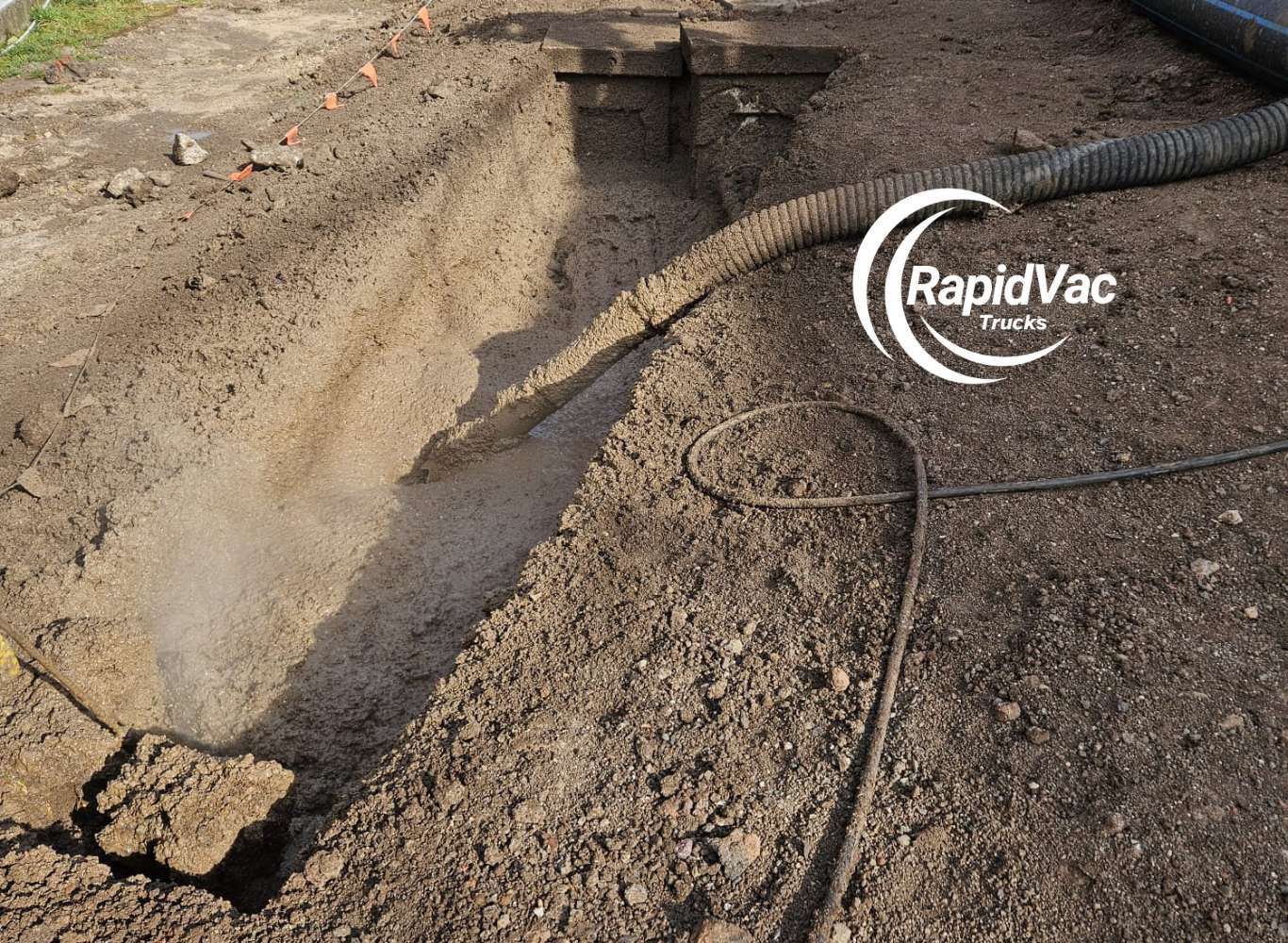
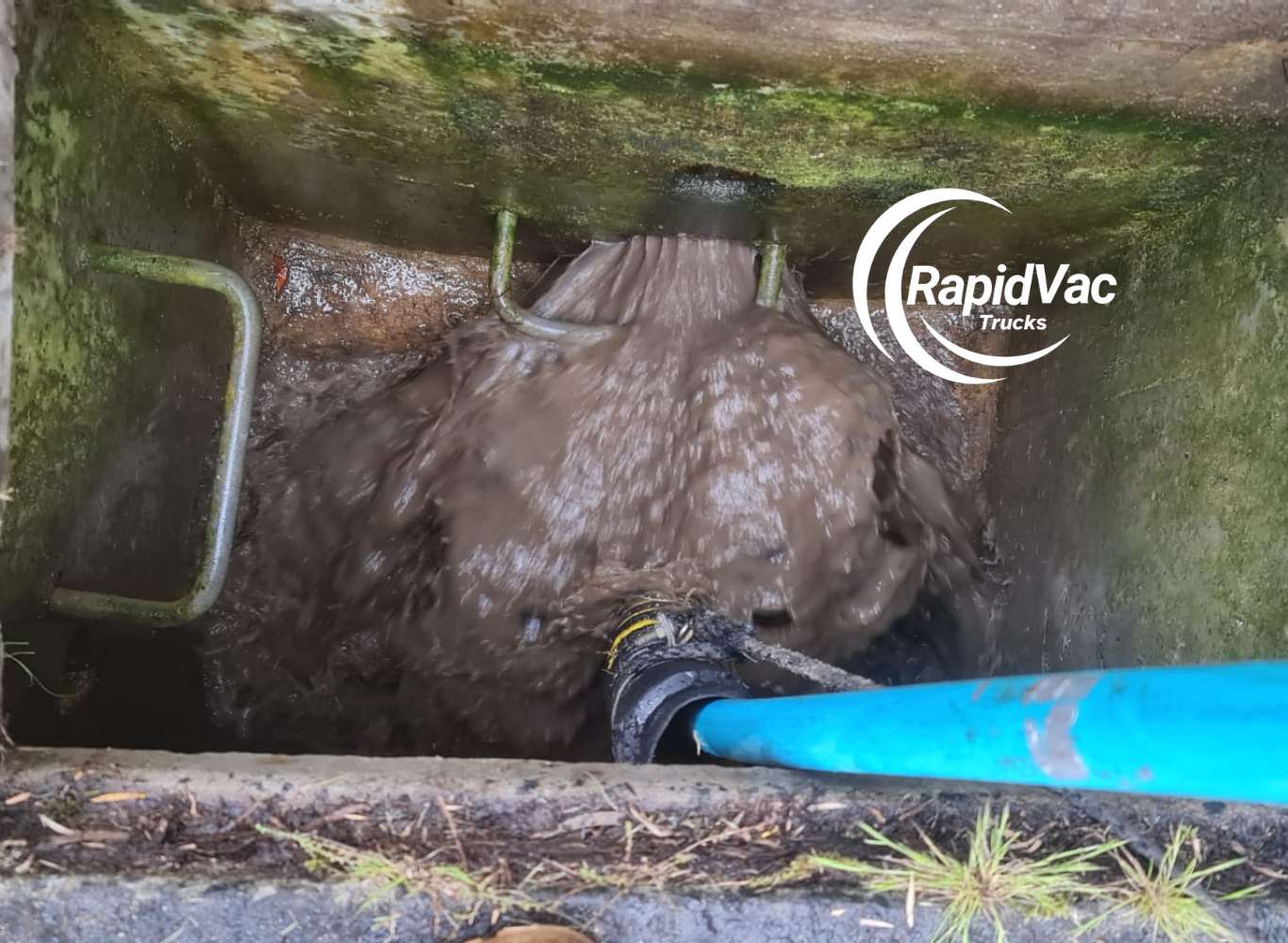
Our operator uses pressurised water to loosen the soil and suction to lift it straight into the truck's tank, one hole at a time, until the service can be seen.
Record.
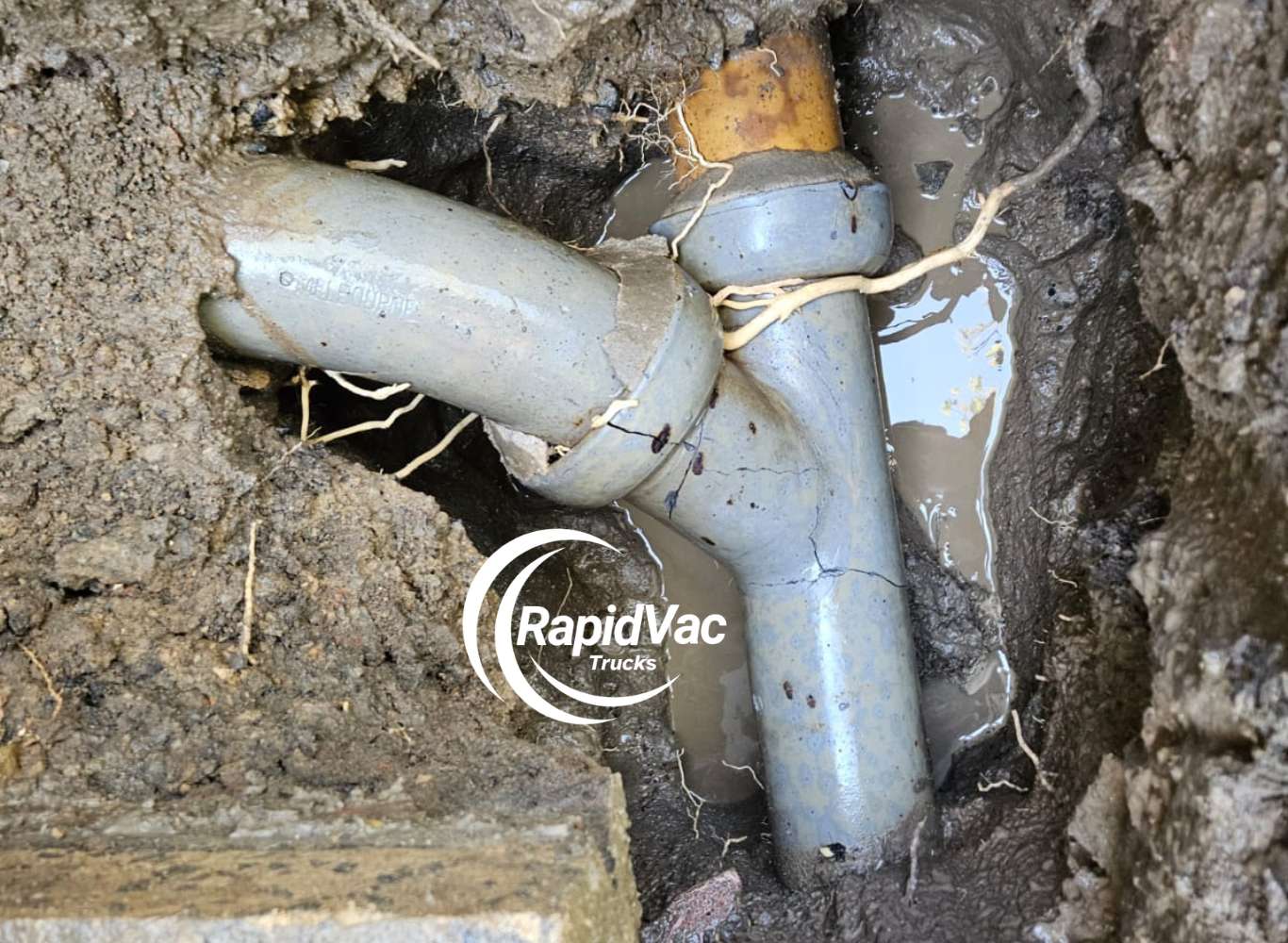
For each hole, note what was found, where it runs and how deep it sits, and keep the photos with your plans.
Dig.
The main excavation then goes ahead from what was found, inside the owner's conditions.
Send the owner's pack with your plans so the set-up follows each owner's conditions.
SafeWork S A notes that water jetting at some high pressures can damage cables and pipe coatings.
Know what is under your Adelaide site before you dig.
Call the Adelaide team to book service locating and a vac truck with operator, or send your plans and photos for a quote.
Who has to use Dial Before You Dig in S A.
On a work site, the duty sits with the business doing or controlling the dig.
SafeWork S A says the person conducting a business or undertaking must take all reasonable steps to obtain current underground essential services information for the work area, and for the areas next to it, before directing or allowing the excavation to start.
That information covers which services may be affected, where they are, including their depth, and any conditions on the work.
It must be given to anyone engaged to do the excavation.
The code adds that this information must be available to workers and contractors, ready for inspection, and kept until the excavation is finished.
It also says a safe work method statement must be prepared for excavation work involving underground services.
Homeowners have a duty of care too.
BYDA describes the person digging as the disturber, who has to take reasonable steps to avoid damaging other people's assets, even on their own land.
What to send us when you book.
Have these ready when you call or send the quote form.
The address and work area, where the dig, trench or bore will run.
Your Before You Dig plans, every response, checked for expiry.
Any owner conditions, including an S A Power Networks permit or a stobie pole nearby.
The job and its depth:
footings, a connection, a trench or a pool, and how deep it goes.
Private services the owner knows about, such as lines to a shed, pool or rainwater tank.
Access:
where a truck can park, gates and overhead obstacles, and any concrete or paving.
And your safe work method statement and induction details for a commercial site.
Call the Adelaide team to talk it through, on oh eight, seven double oh eight, seven five oh two, or upload photos or a site plan with the quote form.
The Adelaide team offers twenty-four seven service, and each job is quoted on its scope, access and material.
Frequently asked questions.
Is Dial Before You Dig still a thing in South Australia?
Yes, under a new name.
The service is now Before You Dig Australia.
In South Australia you lodge online or in the BYDA app, and the eleven hundred number is the help desk for lodging problems during business hours.
How much does Dial Before You Dig cost in South Australia?
Nothing.
Lodging a Before You Dig enquiry is free.
BYDA says owners normally charge, if at all, only for some large development or design enquiries where no digging is taking place.
How long does Dial Before You Dig take?
Plans usually arrive within minutes, but some owners can take up to two business days.
If one has not replied, contact them using the details on your confirmation sheet, and do not start until every affected owner has responded.
How long are Before You Dig plans valid?
It depends on the owner.
BYDA says each plan carries its own expiry date and that these vary, so check every plan and lodge a new enquiry if one has lapsed or your scope has changed.
Can I start digging once I have all the plans?
Not yet.
BYDA says the responses are not approval to dig.
Follow each owner's conditions, such as an S A Power Networks permit or the stobie pole limits, and have the services located and exposed before machines dig near them.
What if I find a service that is not on the plans?
Stop and work out what it is before you go on.
BYDA notes that not every asset owner is a member, so it suggests establishing what type of asset it is and who owns it, then contacting that owner.
Our team can locate and expose it so you can see what it is and where it runs.
What if I hit a cable or gas pipe?
Stop work straight away and keep everyone clear.
If a machine hits a power cable, SafeWork S A says to stay inside until S A Power Networks or an authorised person gives the all clear.
If you must leave because of fire or another danger to life, jump clear with both feet together, never touching the machine and the ground at once, and shuffle at least 10 m away.
Report it to S A Power Networks straight away.
If you hit a gas pipe, never try to stop the leak.
Shut down the plant unless that could ignite the gas, leave the cab or trench, move upwind, and report it to Australian Gas Networks.
Call triple zero if anyone is seriously injured or there is a risk to life or property.
The reporting numbers are in the written guide.
This guide is general information, not safety or legal advice.
Owner conditions and guidance change, so check the current SafeWork S A code, your Before You Dig plans and each owner's pack for your site before work starts.
Sources were checked on the thirteenth of November, 2026.
Dial Before You Dig is now Before You Dig Australia (BYDA), and in South Australia (SA) you lodge the request online or in the BYDA app, for free. You draw your work area on a map, and the owners of the pipes and cables under it send you their plans, usually within minutes but sometimes up to two business days later. SA Power Networks says anyone excavating anywhere in South Australia should use it, from a fence or a mailbox to a pool.
The plans are only the first step. They show roughly where services run, not exactly where or how deep. Before the main dig, someone still has to find and expose them. Rapid Vac Trucks Adelaide does that part: service locating, then a vac truck and an experienced operator to uncover each service so you can see it before a bucket goes near it.
Key takeaways
- A Before You Dig request in SA is free, and lodging is done online or in the BYDA app.
- Plans usually come within minutes; allow up to two business days, and chase any owner who has not replied.
- Plans show approximate routes only. They rarely give a reliable depth and miss private lines.
- Potholing or trenching near SA Power Networks equipment needs a Network Access Permit. SA Power Networks says to plan the work for 28 days after you accept its quote, so apply early.
- Before the main dig, have each service located and exposed so its real position and depth are known.
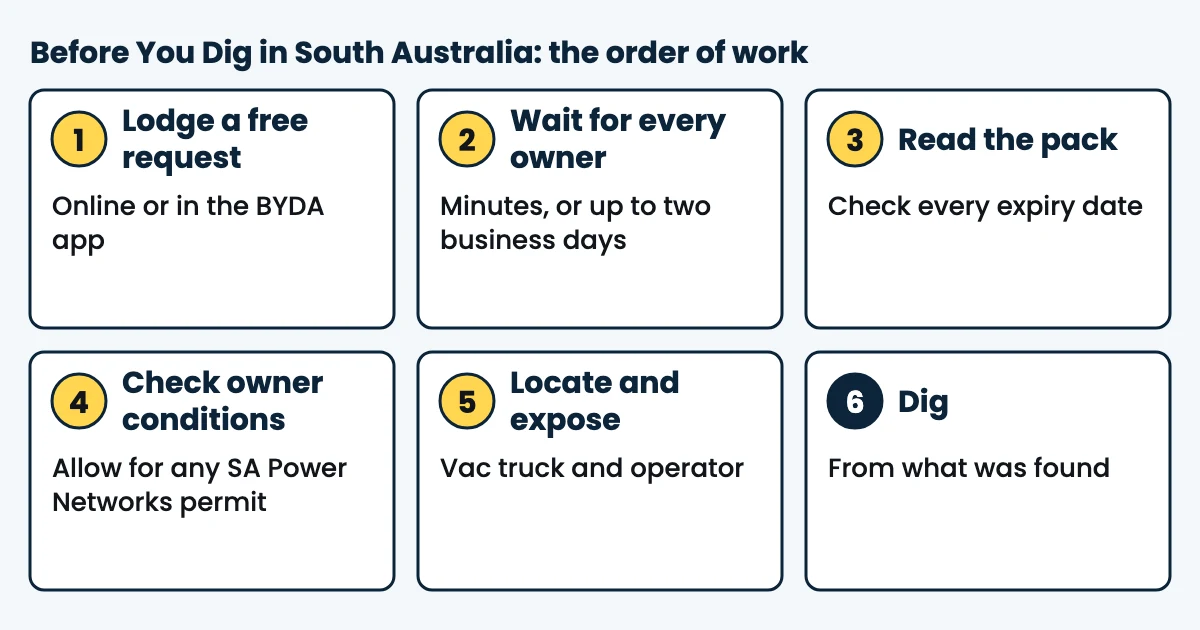
Step 1: lodge a free request with Before You Dig Australia
Lodge before you plan the dig, not on the morning of it. SafeWork SA says Before You Dig enquiries must be lodged online, and BYDA's own lodgement guide lists its website and the iPhone and Android apps as the two ways in. The old 1100 number is still the National Help Desk, for help with an account or a lodgement, during business hours.
BYDA's guide to free plans sets out what the request asks for:
- Your dig site, drawn on the map. Use the mapping tools to draw the whole area you will disturb.
- Project details: the location, start and end dates, and the type of work.
- Who you are working for: a utility, a council or a private client.
- A clear description of the job, so each owner can send the right information.
Lodging costs nothing. BYDA's FAQs say it is free to lodge an enquiry, and that owners normally charge only for large development or design enquiries where no digging is taking place. If someone offers to "get your Dial Before You Dig plans" for a fee, you can do it yourself in a few minutes.
It applies on private land too. BYDA's homeowner answer is a plain yes, and SA Power Networks lists fences, mailboxes, driveways, landscaping and pools as jobs that need it.
Step 2: wait for every owner to reply
After you lodge, BYDA sends an enquiry confirmation that lists every member owner with assets near your site, with their contact details. The plans then come from each owner, not from BYDA. In Adelaide that can include SA Power Networks and ElectraNet for electricity, Australian Gas Networks for gas, and the water and telecommunications network owners.
How long it takes: SA Power Networks says its plans will usually be available within minutes, but in some cases it can take up to two business days. BYDA says members are encouraged to respond within two business days.
If an owner has not replied, chase them. BYDA's FAQs say to contact them directly using the details on your confirmation sheet, and its guide is blunt: do not proceed until you have the information from every owner affected by your project.

Step 3: read what the pack shows, and what it leaves out
A response pack tells you what is recorded near your site. BYDA says owners provide the presence of their assets, their approximate location, usually as plans, and instructions for working around them. It also says the information does not pinpoint the exact location.
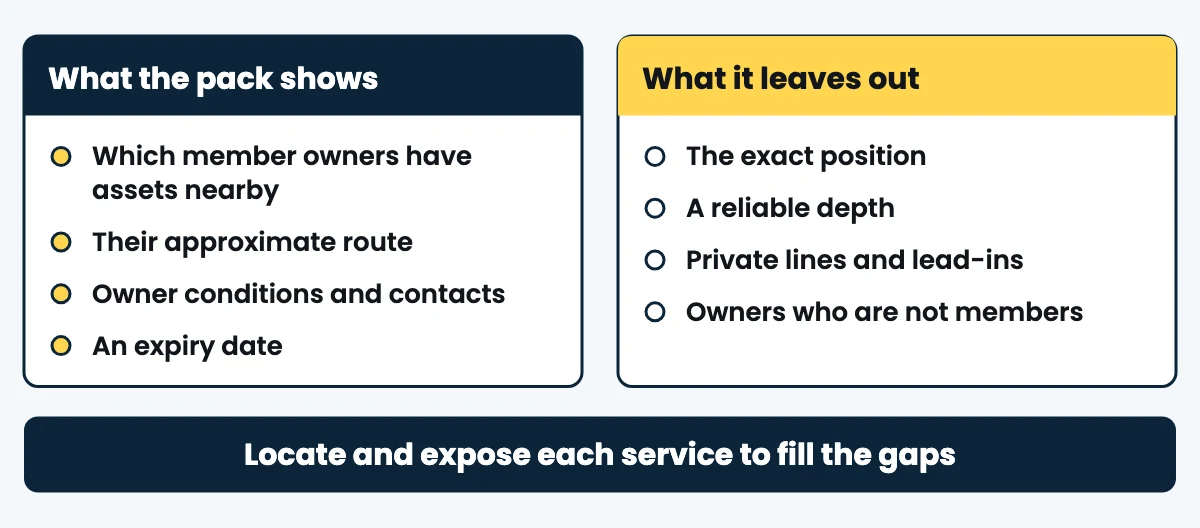
The pack leaves four gaps:
- Position. BYDA says cables and pipes are not laid in straight lines, and you should never assume their depth or alignment.
- Depth. The SA Government's guide to working safely near underground assets says cables are typically buried between 450 mm and 1000 mm. It also warns that soil may have been added or removed, so you should not assume a consistent depth.
- Private lines. SafeWork SA's utility strikes series says the plans do not include service lead-ins to a property, and BYDA's guide notes that domestic gas and power lead-ins are generally not on the plans either.
- Non-members. Most owners are BYDA members, but not all of them, so the plans may not show every service on the site.
Check the expiry date on every plan. BYDA says plans expire and that the expiry date varies between owners. If a plan has lapsed, or your scope changes, lodge a new enquiry so current plans are on site.
Walk the site with the plans. SafeWork SA suggests looking for clues such as pits, valves, marker posts and warning signs, kerb markings, and damaged footpaths, driveways or dips that suggest an old trench.
Step 4: check what the owners need before you dig
Getting every response is not approval to dig. BYDA's FAQs say each person has to follow the directions in each owner's response, and that many owners have their own requirements for locating, working around or accessing their assets.
SA Power Networks: Network Access Permits
SA Power Networks asks for a Network Access Permit for work that includes pot holing, trenching or excavating near its equipment, overhead or underground. Three details shape your programme:
- Lead time. It says to plan your works for 28 days after you accept its quote, and not to schedule them until it has confirmed your date.
- Mark-out first. It says it is your responsibility to visibly mark all cable locations, with depths, before you request access. That is a locating and exposing job.
- Isolation. The SA Government guide says the supply to an underground cable should be isolated before digging where possible. You apply to SA Power Networks for the permit, and it turns the power off until you complete the work and return the permit.
For high voltage cables, the SA Government guide says to check with SA Power Networks on 1300 650 014 or ElectraNet on 1800 243 853 before digging or water jetting near them.
Stobie poles
Stobie poles have their own digging limits. SA Power Networks' guide to excavating near stobie poles sets a maximum depth for each distance band, measured from the face of the pole, when you dig past one.
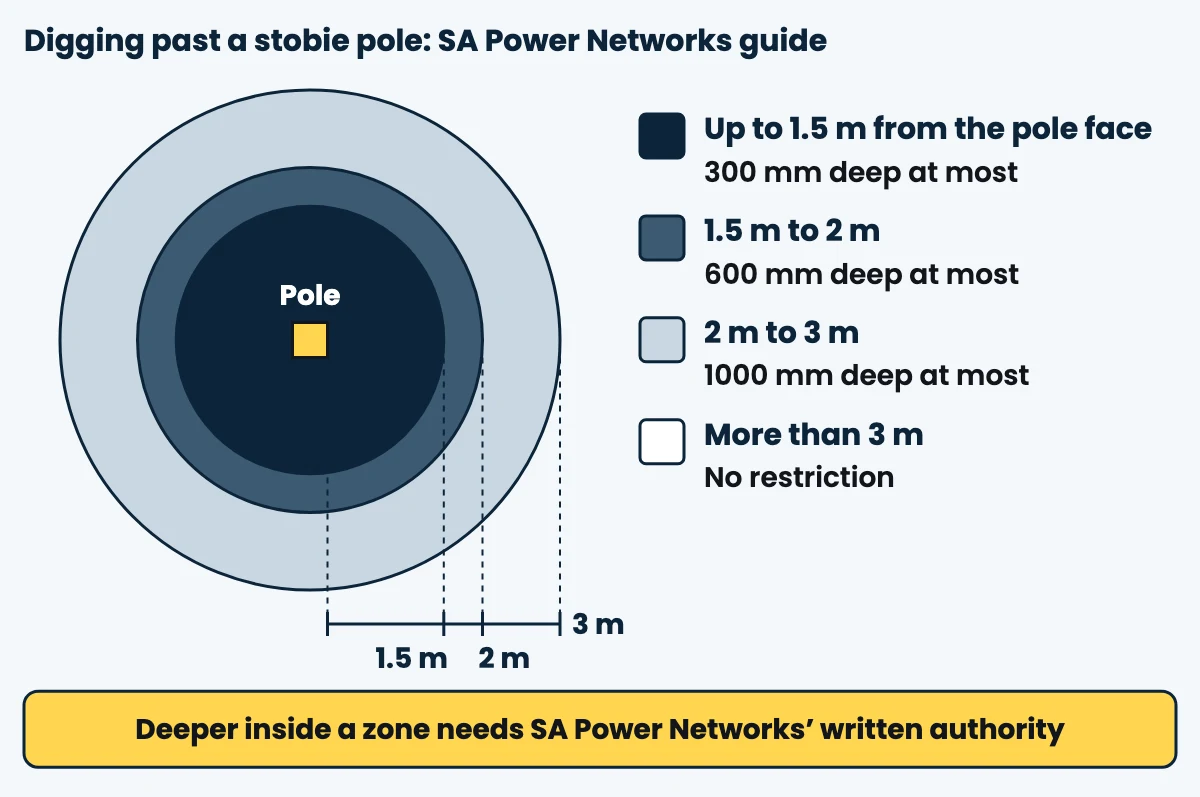
| Distance from the face of the pole | Deepest you can dig without SA Power Networks' written authority |
|---|---|
| Up to 1.5 m | 300 mm |
| 1.5 m to 2 m | 600 mm |
| 2 m to 3 m | 1000 mm |
| More than 3 m | No restriction |
If you are digging up to a pole rather than past it, the same guide allows a hole up to 350 mm wide and 600 mm deep. Anything bigger inside those zones needs written authority, which you request through SA Power Networks' network access page. The guide's drawings are indicative only, so the distances are checked on site.

Step 5: locate and expose the services, then dig
SafeWork SA's Excavation work code of practice assumes the plans could be wrong. It says the information about existing services may not be accurate, so the excavation should start with an initial check of the area. The code gives an example: exposing a short section of each service, usually with water pressure and a vacuum system, which it calls potholing.
BYDA's best-practice guide puts the whole job in five words: plan, prepare, pothole, protect, proceed. It says potholing should use only non-destructive methods, such as careful hand digging or hydro vacuum excavation.
How the locate and expose step runs on your site:
- Locate. A locator traces each service and marks it on the ground. Book our service locator and ground penetrating radar work first, so the marks are down before the truck arrives.
- Expose. Our operator uses pressurised water to loosen the soil and suction to lift it straight into the truck's tank, one hole at a time, until the service can be seen. Read more on our non-destructive digging and vacuum excavation pages.
- Record. For each hole, note what was found, where it runs and how deep it sits, and keep the photos with your plans.
- Dig. The main excavation then goes ahead from what was found, inside the owner's conditions.
SafeWork SA notes that water jetting at some high pressures can damage cables and pipe coatings, so send the owner's pack with your plans and the set-up follows each owner's conditions.
Know what is under your Adelaide site before you dig
Call the Adelaide team to book service locating and a vac truck with operator, or send your plans and photos for a quote.

Who has to use Dial Before You Dig in SA
On a work site, the duty sits with the business doing or controlling the dig. SafeWork SA says the person conducting a business or undertaking must take all reasonable steps to obtain current underground essential services information for the work area, and for the areas next to it, before directing or allowing the excavation to start. That information covers which services may be affected, where they are, including their depth, and any conditions on the work. It must be given to anyone engaged to do the excavation.
The code adds that this information must be available to workers and contractors, ready for inspection, and kept until the excavation is finished. It also says a safe work method statement (SWMS) must be prepared for excavation work involving underground services.
Homeowners have a duty of care too. BYDA describes the person digging as the "disturber", who has to take reasonable steps to avoid damaging other people's assets, even on their own land.
What to send us when you book
Have these ready when you call or send the quote form:
- The address and work area: where the dig, trench or bore will run.
- Your Before You Dig plans: every response, checked for expiry.
- Any owner conditions, including an SA Power Networks permit or a stobie pole nearby.
- The job and its depth: footings, a connection, a trench or a pool, and how deep it goes.
- Private services the owner knows about, such as lines to a shed, pool or rainwater tank.
- Access: where a truck can park, gates and overhead obstacles, and any concrete or paving.
- Your SWMS and induction details for a commercial site.
Call (08) 7008 7502 to talk it through, or upload photos or a site plan with the quote form. You can also find Rapid Vac Trucks Adelaide on Google Maps. The Adelaide team offers 24/7 service, and each job is quoted on its scope, access and material. If you are a plumber, read how Adelaide plumbers use hydro excavation, and civil teams can read where vacuum excavation fits on civil projects.
Plans in hand? Get the services found and exposed
Send your Before You Dig plans and site details, and we will plan the locating and the vac truck and operator around your Adelaide job.
Frequently asked questions
Is Dial Before You Dig still a thing in SA?
Yes, under a new name. The service is now Before You Dig Australia (BYDA). In SA you lodge online at byda.com.au or in the BYDA app, and the 1100 number is the help desk for lodging problems during business hours.
How much does Dial Before You Dig cost in SA?
Nothing. Lodging a Before You Dig enquiry is free. BYDA says owners normally charge, if at all, only for some large development or design enquiries where no digging is taking place.
How long does Dial Before You Dig take?
Plans usually arrive within minutes, but some owners can take up to two business days. If one has not replied, contact them using the details on your confirmation sheet, and do not start until every affected owner has responded.
How long are Before You Dig plans valid?
It depends on the owner. BYDA says each plan carries its own expiry date and that these vary, so check every plan and lodge a new enquiry if one has lapsed or your scope has changed.
Can I start digging once I have all the plans?
Not yet. BYDA says the responses are not approval to dig. Follow each owner's conditions, such as an SA Power Networks permit or the stobie pole limits, and have the services located and exposed before machines dig near them.
What if I find a service that is not on the plans?
Stop and work out what it is before you go on. BYDA notes that not every asset owner is a member, so it suggests establishing what type of asset it is and who owns it, then contacting that owner. Our team can locate and expose it so you can see what it is and where it runs. Call (08) 7008 7502 to book.
What if I hit a cable or gas pipe?
Stop work straight away and keep everyone clear. If a machine hits a power cable, SafeWork SA says to stay inside until SA Power Networks or an authorised person gives the all clear. If you must leave because of fire or another danger to life, jump clear with both feet together, never touching the machine and the ground at once, and shuffle at least 10 metres away. Report it to SA Power Networks on 13 13 66.
If you hit a gas pipe, never try to stop the leak. Shut down the plant unless that could ignite the gas, leave the cab or trench, move upwind, and report it to Australian Gas Networks on 1800 427 532. Call 000 if anyone is seriously injured or there is a risk to life or property.
This guide is general information, not safety or legal advice. Owner conditions and guidance change, so check the current SafeWork SA code, your Before You Dig plans and each owner's pack for your site before work starts. Sources were checked on 13 November 2026.